

雅泰酒店家具
YATAI HOTEL FURNITURE
Consultation Hotline:
13924949213
Guangdong Professional Custom Hotel Furniture Manufacturer
YATAI HOTEL FURNITURE GROUP
|
|
Materials & Craftsmanship
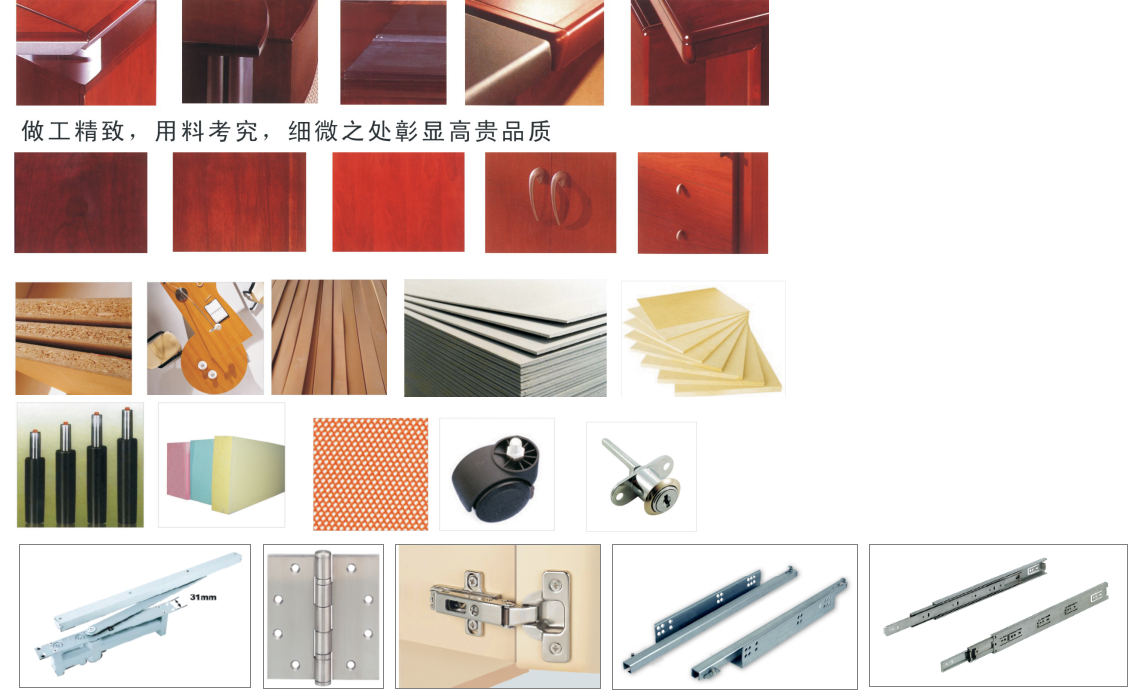
Yatai Hotel Furniture – Materials & Craftsmanship Yatai has established a flexible material system grounded in “premium domestic sourcing as the foundation, with imported high-end options as the extension,” seamlessly integrating traditional craftsmanship wisdom with modern intelligent manufacturing techniques. Global Material Sourcing •Wood: North American imported AAA-grade wood veneers featuring clear grain and uniform color; Burmese teak undergoes 365 days of natural air-drying to achieve an optimal moisture content of 8%–12%. •Eco-Friendly Base Materials: Priority is given to FSC-certified sustainable wood and E0-grade eco-friendly panels, ensuring environmental integrity from the source. •Leather: Premium domestic top-grain leather is carefully selected, with only 40% of each hide—the most flawless portion—used. Italian imported top-grain leather is available upon request. •Fabric: High-quality domestic fabric with a tear strength of up to 20N is used; European, American, or Korean imported premium fabrics are available upon request. •Foam: Bulong high-density, high-resilience foam is used, offering excellent flame retardancy, superior rebound, and long-lasting shape retention. •Hardware: Domestic brand DTC is used to ensure smooth operation and durability. For critical load-bearing components such as springs in sofas and bed frames, 65Mn or No. 70 high-quality steel is used. •Metal Components: For hardware bases, edge trims, and decorative elements, Yatai uses 304 stainless steel as the base material for custom production. This material offers excellent corrosion and oxidation resistance, with surface finishes available in brushed, mirror-polished, or titanium-plated options to meet the diverse requirements of hotel furniture in terms of strength, aesthetics, and durability. Stainless steel components are produced by specialized partner suppliers, with Yatai overseeing quality control to ensure material specifications, machining accuracy, and surface treatments fully comply with project requirements. •Paint: We use renowned coating brands such as Taiho environmentally friendly polyester paint and EasyTop water-based paint. Taiho originates from Taiwan, and EasyTop is a Sino-German technology collaboration brand, both enjoying excellent reputations in the industry. Solid Wood Craftsmanship Yatai strictly controls wood moisture content from the source, deeply integrating traditional mortise-and-tenon techniques with modern precision machining. Solid wood production begins with rough cutting, where materials are cut with an allowance of 30–50mm beyond the net length to allow for subsequent finishing. During material selection, straight grain is strictly distinguished from cathedral grain, and defects such as internal cracks and knots are removed. Decayed wood is strictly prohibited for use in visible parts. For panel lamination, strips with similar color and grain are selected, adhesive is mixed in a 10:1 to 10:1.5 ratio, and pressing is maintained for no less than 4 hours to ensure strong, reliable joints. The planing process reduces wood to the specified thickness, with tolerances controlled within ±0.2mm. Shaping is performed precisely using templates to ensure smooth surfaces free from chipping or burrs. Drilling and tenoning are carried out according to drawings and process specifications, with hole positioning tolerance not exceeding 0.5mm and hole diameter tolerance within ±0.2mm. For tenoning, Yatai employs the innovative “Lingnan Tenon” technique—a modern innovation that integrates the essence of classic mortise-and-tenon joints such as dovetails and mitered tenons. Through precision CNC machining, the fit between tenon and mortise achieves accuracy within 0.1mm. This technique preserves the structural advantages of traditional joinery while overcoming the precision instability of handcrafted tenons. It increases structural load-bearing capacity by 40% and effectively addresses the cracking issues common in solid wood furniture. The precision cutting process controls length and width machining errors within 0.2mm, with diagonal deviation for panels under 1 meter not exceeding 0.5mm. Finally, the sanding process follows a sequence from coarse to fine grit, ensuring a smooth, flat surface with no scratches visible along the grain. Panel Craftsmanship Panel production begins with veneer application, which is completed by specialized external suppliers and inspected upon return to ensure no bubbles or delamination. Cold pressing pressure is controlled between 4 and 6 tons, with a holding time of 2 to 4 hours, ensuring strong adhesion and no separation. Cutting is performed precisely to net dimensions, with diagonal differences under 1mm and dimensional tolerances within ±0.5mm. Edge banding uses solid wood or wood veneer, ensuring color and grain match and a strong bond. Finally, 120# sanding belts are used for fine sanding to improve surface smoothness in preparation for finishing. Coating Process Yatai employs a “three-base, two-top” coating system as standard, with the option to upgrade to a “five-base, three-top” system upon request. We understand that “coating is 30% application, 70% sanding.” Fine sanding after each coat creates an optimal foundation for the subsequent layer. •Substrate Preparation: Substrate inspection, putty filling, sanding begins with 240# sandpaper along the wood grain, progressively advancing to 360#. A specialized sealer is applied to harden wood fibers and burrs, reducing moisture absorption. Grese is applied to accentuate the natural grain, with excess color wiped away. •Base Coat Construction: The base coat forms the “skeleton” of the paint film. The first base coat is applied with a viscosity of approximately 16 seconds; after drying, it is sanded with 320#. Nail holes are filled with putty powder matched to the panel color. The second base coat has a viscosity of 18 seconds; after drying, it is sanded with 400#. The third base coat has a viscosity of 16 seconds; after drying, it is sanded with 600#–800# until smooth. •Toning and Topcoat: Before toning, a “pre-production sample” is created; bulk work proceeds only after color confirmation against the standard sample. The principle of “multiple thin coats” is followed, with each coat carefully compared to the standard color sample. The topcoat is applied in a dust-free environment with viscosity controlled between 11 and 12 seconds, resulting in a smooth, flat finish free from orange peel, pinholes, or whitening. Five-Base, Three-Top Process: 1.Substrate Preparation: Inspection, putty filling, sanding from 240# to 360# 2.Sealing: Application of specialized sealer to harden wood fibers and burrs 3.Color Staining: Application of Grese to highlight natural grain, excess wiped away 4.First Base Coat: Viscosity 16 seconds, dried and sanded with 320# 5.Nail Hole Filling: Putty powder matched to panel color fills nail holes and gaps 6.Second Base Coat: Viscosity 18 seconds, dried and sanded with 400# 7.Third Base Coat: Viscosity 16 seconds, dried and sanded with 600#–800# to achieve mirror-like smoothness 8.Toning: Pre-production sample created, approved against standard sample, applied in multiple thin coats 9.Topcoat: Applied in dust-free environment, viscosity 11–12 seconds Open-Pore Finish vs. Closed-Pore Finish •Open-Pore Finish: Highlights wood grain texture; the number of base coats is controlled to avoid completely filling the wood pores. Closed-Pore Finish: Pursues absolute smoothness; wood pores are completely filled through thorough sanding to achieve a mirror-like effect. Upholstery Craftsmanship Yatai upholstered products fall into two categories: solid wood upholstered items (based on finished wooden frames) and fully upholstered items (constructed from the frame up). •Solid Wood Upholstered Items (e.g., upholstered sofas with painted frames, bed headboards): Based on a finished painted wood frame, webbing or serpentine springs are installed on non-visible surfaces, and a base layer of foam is applied. Using shaped templates, foams of varying densities and thicknesses are layered and hand-carved to precisely shape the seat, backrest, armrests, and other contoured areas. Finally, the pre-cut outer fabric is fitted over the sculpted foam core and stretched from the center outward, ensuring a smooth, taut surface with clean lines. •Fully Upholstered Items (e.g., fabric sofas, ottomans): Production begins with frame assembly. Frame wood moisture content is controlled between 12% and 18%. Serpentine springs and webbing are installed on primary load-bearing areas such as seats to form a tight grid. Subsequent foam shaping and upholstery application follow the same process as for solid wood upholstered items. Key Quality Controls: 1.Protect finished painted surfaces throughout the process to prevent scratches. 2.Upholstered structures must be robust, shapes must be full and accurate, with smooth transitions and no hard edges. 3.Fabric grain direction must be correct, seams must be strong, and no excess wrinkles should remain after upholstery application.
|

Sales Director: +86 13924922713
Chief Designer: +86 13924949213
Website: www.yataifurniture.com
Tel: 400-1800-819 / +86 760-88710819
Business QQ: 1990028815
WeChat: ℡13924949213
Address: Yatai Headquarters Building, No. 19 Xihuan Third Road, South District, Zhongshan City, Guangdong Province, China


Scan to visit Yatai Headquarters